Everyone knows how to get visitors, but how many know how to get visitors that turn into money?
In the world of digital marketing and content creation, traffic is a vanity metric. Revenue is sanity. You can have millions of hits, but if they aren't converting, your business model is flawed. Today, I am moving away from theoretical discussions and abstract concepts. Instead, I am offering you a practical, step-by-step tutorial on building an automated traffic ecosystem.
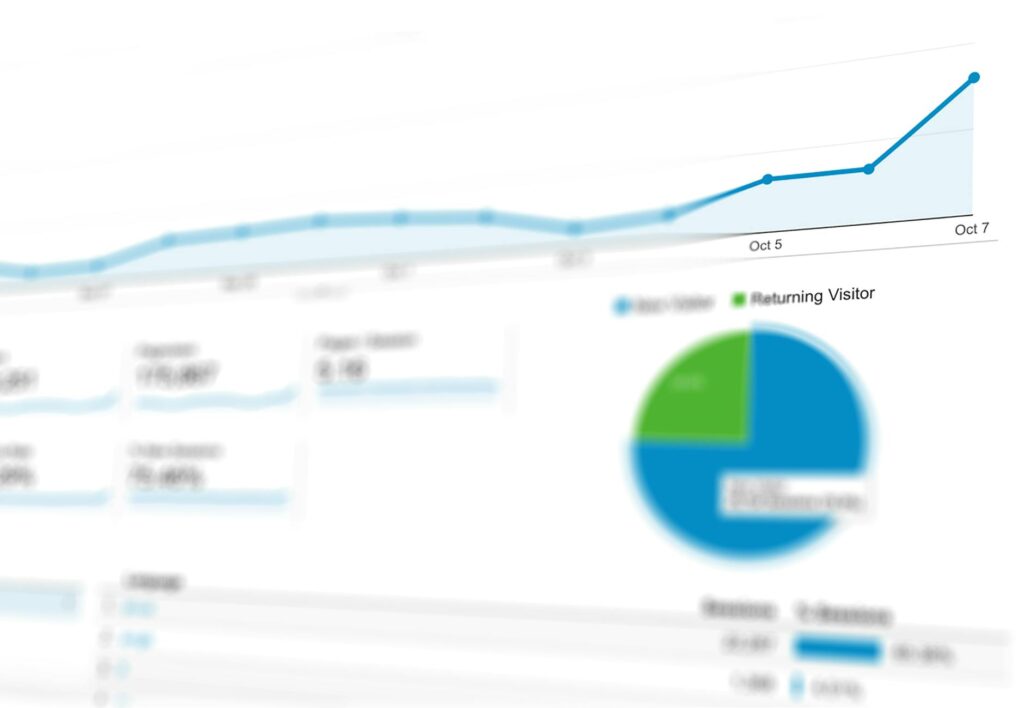
I recently launched a brand-new website as part of our "AI Money Machine" series. In just one month, this site has generated over 3,000 unique visits. But here is the critical data point: the vast majority of this traffic originates from Tier 1 countries, specifically the United States and Ireland.
Why does this matter? In the world of display advertising (like Google AdSense), traffic from these regions commands the highest CPM (Cost Per Mille). A thousand visitors from the USA are worth significantly more than ten thousand visitors from low-CPM regions.
In this guide, I will break down exactly how I achieved this using three distinct methods. We will move from basic automation to advanced workflows, culminating in a "legendary" strategy that generates consistent, high-value traffic.
If you have a website, a blog, or a YouTube channel, the next few minutes of reading will be the most important investment you make today. Let’s dive into the mechanics of the machine.
The Philosophy: Why Automation is Non-Negotiable
Before we open the toolbox, we must understand the strategy. The biggest bottleneck for any content creator or website owner is time. You cannot be everywhere at once. You cannot manually post to Twitter, Facebook, Pinterest, Instagram, and LinkedIn every time you publish a blog post—at least, not if you want to have time left over to actually create content.
The solution is Automation.
By building a system that automatically syndicates your content, you ensure that your website is working for you even when you sleep. The methods we will discuss today range from simple "If This, Then That" logic to complex database-driven workflows.
Method #1: The Quick-Start Strategy (IFTTT)
The first method is designed for speed and simplicity. It utilizes a tool called IFTTT (If This, Then That). This platform acts as a digital bridge, connecting two otherwise unrelated services.
The Concept
The logic is simple: As soon as you publish a new article on your website, IFTTT detects it and automatically pushes that link to your social media platforms.
Step-by-Step Implementation
-
Account Setup: Navigate to IFTTT.com and create a free account. Once logged in, click on the "Create" button to start a new Applet.
-
The "If This" Trigger: You need to tell IFTTT what to listen for. In our case, we want it to listen to your website.
-
Select RSS Feed as your service.
-
Locating your RSS Link: For most WordPress and standard websites, your RSS feed is simply your domain followed by
/feed. (e.g.,https://yourwebsite.com/feed). -
Input this URL and click "Create Trigger."
-
-
The "Then That" Action: Now, you determine where the content goes. Let’s use X (formerly Twitter) as an example.
-
Search for Twitter/X and select "Post a Tweet."
-
Connect your Twitter account.
-
IFTTT will automatically populate the tweet with your article title and link. You can customize this message if you wish.
-
Click "Create Action."
-
-
Scaling to Other Platforms: You can repeat this process for Facebook Pages. Select Facebook as your action service, choose "Create a Page Post," and connect your business page.
The Verdict: Method #1 is excellent for beginners. It ensures that your social channels are never silent. However, it offers limited customization regarding how the post looks. For that, we need to graduate to Method #2.
https://www.youtube.com/watch?v=iE1jS4_ZB90Method #2: Advanced Automation with Make.com & Airtable
This is where we shift from being "content posters" to "content engineers." This method is significantly more powerful because it allows for centralized control and status tracking.
We will use two tools:
-
Make.com (formerly Integromat): A visual automation builder.
-
Airtable: A cloud-based database that acts as our "Command Center."
The Workflow Overview
The automation works like this:
-
You populate a row in Airtable with your content details (Image, Title, Link).
-
You set the status to "Pending."
-
Make.com watches this table. When it sees a "Pending" post, it grabs the data.
-
It publishes the content to Facebook, Pinterest, and Instagram simultaneously.
-
Crucial Step: It goes back to Airtable and changes the status to "Approved" or "Posted" so the content is never duplicated.
Phase 1: Building the Database (Airtable)
First, create a free account on Airtable. You need to create a "Base" (which looks like a spreadsheet) with the following specific columns:
-
Name: The title of your post or caption.
-
Image: An attachment field where you upload the visual asset.
-
Link: The URL to your blog post.
-
Status: A single-select field with options like "Pending" and "Approved."
This table is your control room. You can queue up weeks of content here in minutes.
Phase 2: Constructing the Blueprint (Make.com)
For those unfamiliar with API integration, this might sound daunting. However, Make.com utilizes a visual "drag-and-drop" interface.
-
The Trigger (Airtable): Set up a module to "Watch Records" in Airtable. Configure it to look for records where the Status is "Pending."
-
The Actions (Social Media): Connect modules for your desired platforms.
-
Facebook: "Create a Page Post." Map the Image field from Airtable to the photo section, and the Link field to the text section.
-
Pinterest: "Create a Pin." Select the board, map the image, and ensure the destination link points to your blog.
-
Instagram for Business: Note that Instagram posts do not support clickable links in the caption. However, posting the image keeps your account active. You can direct users to the "Link in Bio."
-
-
The Loop Closer (Airtable Update): This is the secret sauce. Add a final module: Airtable - Update Record. Configure it to take the
Record IDof the item just processed and change the Status cell from "Pending" to "Approved."
Why This Method is Superior
This "Command Center" approach solves the biggest problem in automation: redundancy. Simple bots often repost the same old content or fail to upload images correctly. With this system, you have a visual verification of exactly what has been posted and when. You retain full control over the creative assets, ensuring that the image posted to Pinterest is optimized for Pinterest, rather than just being a generic thumbnail scraped from your RSS feed.
For those who find the setup complex, I often share "Blueprints" (pre-made automation files) that can be imported directly into Make.com. This allows you to simply plug in your API keys and start running the machine immediately.
Method #3: The "Legendary" Traffic Source (Pinterest Strategy)
If Method #1 is "Good" and Method #2 is "Excellent," then Method #3 is simply The Best.
In our analytics dashboard, while Facebook provides steady traffic, Pinterest is the engine driving the viral spikes. We recently utilized a specific strategy that brought over 5,000 visits to a related account, and we are applying it here with great success.
Understanding the Pinterest Difference
Unlike Facebook or Twitter, Pinterest is not a social network; it is a visual search engine. Content on social media has a lifespan of minutes or hours. A Pin on Pinterest can continue to drive traffic for months, even years, after it is posted.
The Strategy: High-Quality Visuals
The key to unlocking this traffic is not just automation, but quality.
-
Vertical Format: We create Pins strictly in the 1000x1500px format.
-
Visual Hooks: The design must stop the scroll. We use high-contrast text overlays that promise a solution or a benefit.
-
Keyword Optimization: The title and description of the Pin are packed with SEO keywords relevant to the blog post.
The Results
When looking at our new site's data, we see that the traffic coming from Pinterest has an incredibly high engagement rate. These users are actively looking for solutions, ideas, or products. When they land on the blog, they are primed to read and engage.
Furthermore, Pinterest traffic is heavily skewed toward Tier 1 countries (USA, UK, Canada, Australia). This aligns perfectly with our goal of maximizing AdSense revenue. By combining the automation of Method #2 (to keep the account active) with manual, high-quality Pin creation (Method #3), we create a hybrid system that signals to the Pinterest algorithm that we are a top-tier creator.
The Traffic Hierarchy: A Summary
To summarize, effective traffic generation is not about choosing one method, but layering them for maximum effect.
-
Level 1: IFTTT (The Safety Net). This ensures that no matter how busy you get, your content is always shared immediately upon publication. It requires zero maintenance.
-
Level 2: Make.com + Airtable (The Engine). This provides professional-grade distribution. It allows you to schedule content, manage assets visually, and ensure your brand looks polished across all platforms.
-
Level 3: Pinterest SEO (The Growth Hack). This is where the viral potential lies. While the other methods maintain your presence, this method actively hunts for new, high-value users.
The Path to Monetization
Why do we go through all this effort? It comes back to the dashboard I showed you at the beginning.
3,000 visits.
That is 3,000 opportunities for monetization. Whether you are using Google AdSense, affiliate marketing, or selling your own digital products, traffic is the lifeblood of your business.
By securing traffic from the USA and Ireland, we are ensuring that our Revenue Per Mille (RPM) is high. A site with 3,000 Tier 1 visitors can often out-earn a site with 20,000 Tier 3 visitors.
Your Next Steps
If you are serious about building an online income, you cannot rely on "hope marketing." You need a machine.
-
Build the Foundation: If you haven't started your site yet, check the previous entries in our "AI Money Machine" series to get your WordPress site up and running with automated content.
-
Install the Pipes: Set up your IFTTT account today. It takes five minutes.
-
Build the Engine: Challenge yourself to build the Make.com and Airtable workflow. It will change how you view content distribution forever.
-
Master the Visuals: Commit to mastering Pinterest designs.